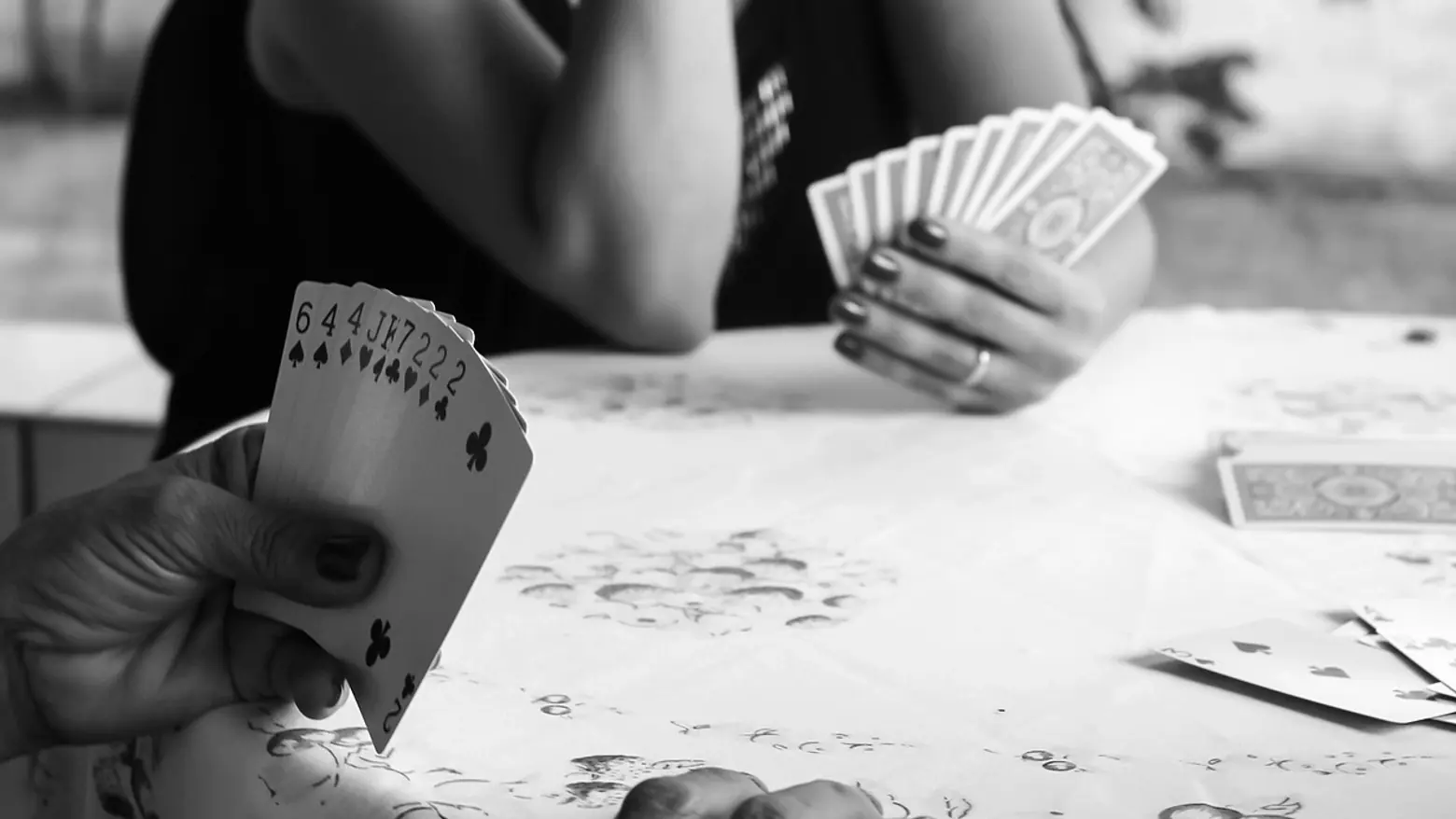
Filmed from the rail, a poker tournament looks like a room full of people staring at felt. Nothing seems to happen for minutes at a time, and when a big pot is finally pushed across the table, the watcher has no idea why. Televised poker exists because producers solved that problem: they found a way to show the audience what the players cannot see. Knowing how that is done makes the coverage far more useful, especially if you watch it to understand the game rather than just for the drama.
The camera that changed everything
The key piece of equipment is the hole-card camera: a small lens built into the table rail or under a glass panel in front of each seat. When a player peeks at their two private cards, the camera captures them, and the graphics team puts them on screen next to the player's name. Since the early 2000s this has been standard on almost every serious poker broadcast, and it turned the game into something a casual viewer could follow.
Once the cards are visible, the broadcast can add a layer that the players never get: a running percentage beside each hand showing how often it would win if all the remaining cards were dealt out. Those numbers are calculated from the known cards only. They describe the situation in that moment, not the skill of the players, and they swing hard on every new card.
Edited shows versus live-with-delay streams
Poker coverage comes in two broad forms, and they teach very different things.
| Format | How it is made | What you see |
|---|
| Edited episodes | Hours of play are filmed, then cut down to the most interesting hands, with commentary recorded afterwards | Big pots, all-ins and eliminations; few routine folds |
| Live with a delay | The feed runs continuously but is held back by a set interval before it airs | Every hand at the featured table, including the quiet ones |
The delay is not a technical accident. If hole cards were shown in real time, a player's friend could watch the stream and pass on information during the hand. Holding the broadcast back long enough for each hand to finish removes that risk, and tournament rules usually also bar players from using phones at the table.
Edited shows are entertaining, but they give a distorted picture: because the dull hands are cut, it looks as if players commit their whole stack every few minutes. Delayed live coverage is slower and closer to what a real session feels like, with long stretches of folding and small pots.
What the commentary adds
Most broadcasts use two voices. One handles play-by-play: who raised, how much, what the pot is now. The other is an analyst, usually someone who has played a great deal, who explains why a decision might make sense. Good analysts talk about ranges, meaning the whole set of hands a player could plausibly hold given their actions, rather than pretending to know the exact cards. Since the viewer does know the exact cards, it is a useful exercise to cover the graphics with your hand now and then and try to think the way the player at the table must.
Commentary on edited shows is often recorded after the event, so the hosts already know how each hand ends. That can make their reactions feel sharper than they really were in the moment. Live commentators have to call hands as they unfold and are more likely to change their minds mid-hand, which is closer to how the players themselves think.
What a viewer can actually learn
- Position. Watch how often players fold strong-looking hands from early seats and play weaker ones from the button. Our guide to how to play Texas Hold'em explains why seat order matters so much.
- Bet sizing. Notice how bets relate to the size of the pot, and how the same player sizes up or down with different hands.
- Tournament pressure. As blinds rise and the field shrinks, short stacks have to take risks. Coverage near the prize places shows this clearly.
- Patience. Live delayed streams show how much of a strong player's day is spent folding.
What television cannot teach is the feel of your own money in the pot. The players on screen have usually paid large entry fees, and the hands shown are a tiny, selected slice of their results. Copying a famous bluff at a home game rarely works the way it did on camera.
Finding the coverage on Canadian screens
Major tournament series are mostly played in Las Vegas, in Europe and at card rooms around the world, so time zones decide a lot. A final table that starts in the Nevada afternoon lands in the evening in Toronto, and later still in St. John's, where Newfoundland's half-hour offset puts the clock four and a half hours ahead of the Pacific coast. European events tend to air on Canadian screens in the morning or early afternoon.
Which channels carry poker changes from season to season, and many events now go out as streams rather than on traditional sports channels. Viewers who have moved away from cable often look at internet-delivered channel packages, and a search for iptv canada brings up services built around live sport and entertainment channels that can be watched on a TV, laptop or phone. Whichever route you take, check what a service actually carries and read its terms before you subscribe, since line-ups and replay options differ.
A few practical habits help:
- Check the tournament organiser's own schedule for start times, then convert them to your time zone.
- Decide whether you want edited highlights or the full delayed feed; they are often listed separately.
- Look for replays if a final table runs past midnight in your part of the country.
Watching without playing
Plenty of people enjoy poker on TV and never play for money, and that is a perfectly good way to enjoy the game. For those who do want to play, real-money poker is for adults only, and the rules on online poker differ by province, so check what applies where you live before signing up anywhere.
Treat a broadcast as a lesson in reading situations rather than a highlight reel to imitate. The cameras show you every card, but the real skill on display is in the decisions players make while seeing only two of them.